
CMMS For Earthmoving Fleets

Work Order Management Built For Crews
Plan, issue and complete work orders for earthmoving fleets without slowing the job down. Samurai keeps crews moving, captures real costs, and gives you a clear picture of what’s happening across your fleet.
Work Order Management from the Field to the Workshop
Work orders should make the job easier. Instead, they often add friction. Technicians avoid updating them. Supervisors chase information. Costs get entered later, if at all. And by the time reports are run, the data is already out of date.
Samurai takes a different approach. Work order management is built around how maintenance actually happens on site, not how software expects it to happen.
Work Based on Real Usage
Work is triggered by hours, kilometres and runtime, not fixed dates. Jobs happen when they should.
Execute from Anywhere
Crews update and close work orders on site. No rework later, no gaps in the records.
Capture Accurate Costs
Labour, parts and services are recorded as the job happens, so you always know the true cost.
Setup Recurring Work
Regular servicing and repeat work is handled automatically, without manual follow-up.
All Resources in One Place
Parts, tools and resources are listed upfront, so crews have what they need before the job starts.
Execute Forms and Checklists
Safety forms, permits, checklists and instructions are handled as work order, not another App.
Work Order Scheduling Built for Earthmoving Fleets
Work order scheduling shouldn’t create more work.
In earthmoving fleets, jobs don’t line up neatly. Machines run different hours, priorities shift, and multiple tasks land on the same asset at the same time. Basic scheduling quickly turns into missed services, duplicate work, or jobs getting pushed back.
Samurai handles work orders the way the job actually runs. Work is planned, created and adjusted automatically, so you’re not constantly fixing it.
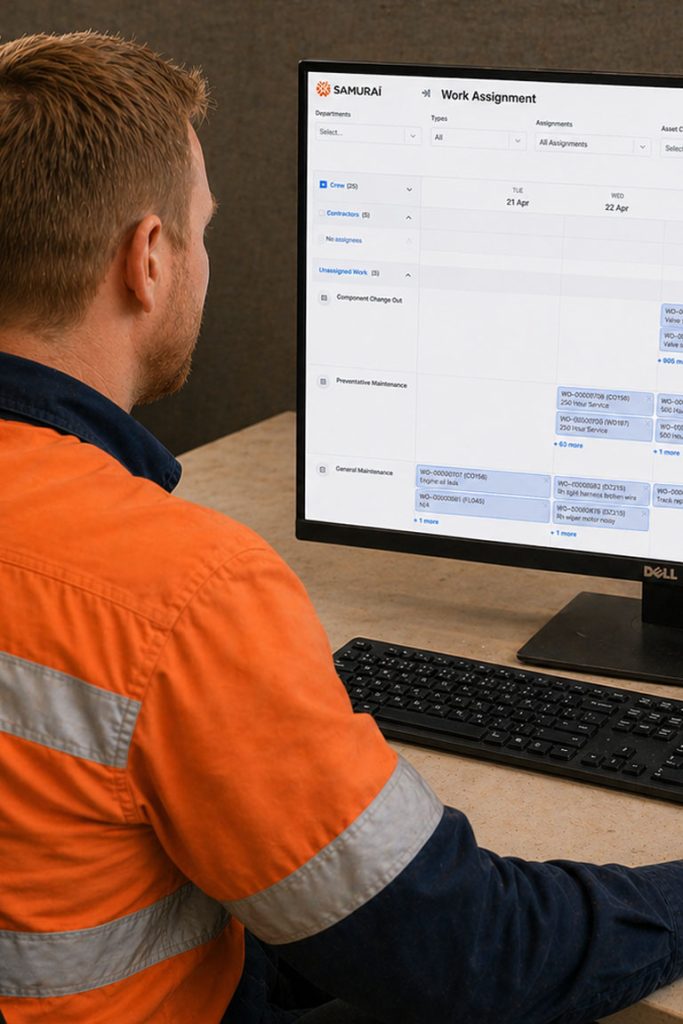
TASKS THAT DRIVE EVERY WORK ORDER
Every work order starts with a defined maintenance task.
Tasks set the standard for how the job is done. They define the labour, parts, tools and services required, so every work order is consistent and ready to go before it reaches the crew.
Instead of building work orders from scratch, you’re working from a structure that’s already been thought through properly.
BUILT WITH EVERYTHING INCLUDED
When a work order is created, everything comes with it.
Labour requirements, parts, consumables, tools and external services are all pulled through from the task. Crews know what’s required before they start, and nothing gets missed on the job.
That means less back and forth, fewer delays, and more jobs completed properly the first time.
ACCURATE COSTS Based On AT Tasks
Because tasks define labour, parts and services upfront, every work order carries accurate cost expectations.
As jobs are completed, actual costs are captured against that structure. Over time, you get a clear view of maintenance costs, trends, and true cost of ownership.

“We can build forms quickly and get them out to the field straight away. The crews fill them in on their phones, whether they’ve got signal or not, and everything syncs back automatically. It’s simple, and it actually gets used.”
Mitch, Superintendent – ASG Equipment
Read customer story →Why earthmoving contractors choose Samurai
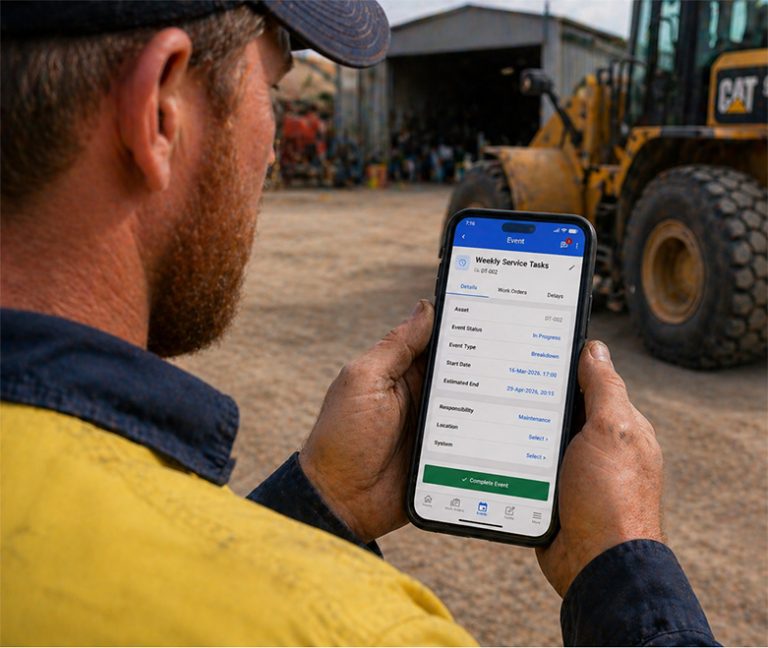
Work orders that reflect real jobs
Work can be created and completed in the field, directly linked to assets, components and forms, and includes photos, notes and parts as part of the process.
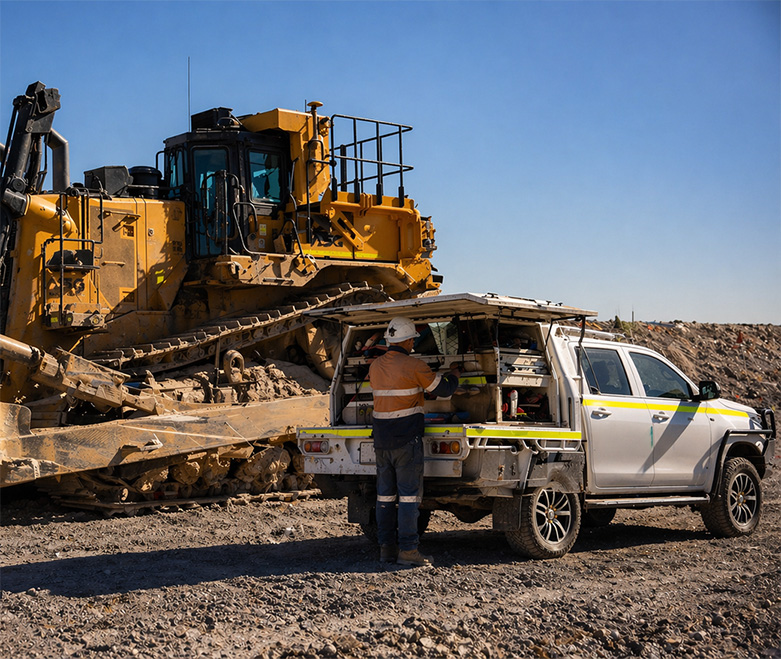
Downtime and failures are Reduced
By combining scheduling, tracking and real-time data, Samurai prevents missed maintenance, and reduces unplanned downtime.
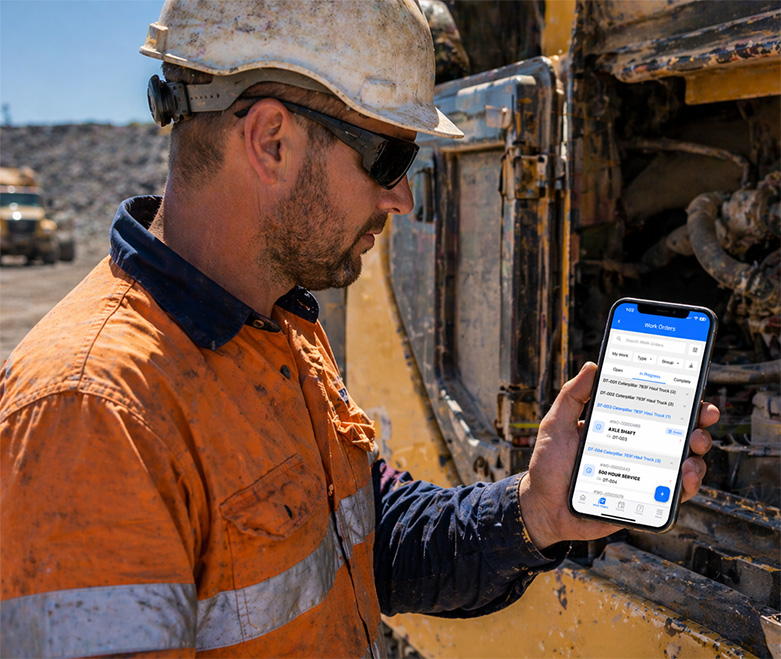
Mobile workflows built for the field
Maintenance software only works if crews actually use it, so Samurai is designed around how work happens on site.
What changes when your maintenance SOftware actually works
When the system matches how your operation actually runs, everything starts to fall into place.
Crews use it by choice
Frequently asked questions
How are work orders created in Samurai?
Work orders are generated automatically from maintenance tasks based on time, usage or condition. You can also create them manually for breakdowns or ad hoc work. Either way, jobs are structured properly from the start.
What information is included in a work order?
Each work order includes the labour, parts, tools, services and instructions needed to complete the job. Everything is defined upfront through maintenance tasks, so crews know exactly what’s required before they begin.
Can work orders be completed in the field?
Yes. Work orders are designed to be updated and closed on site using a mobile device. Labour, parts and notes are captured as the job happens, so there’s no need to re-enter information later.
How does Samurai prevent duplicate or missed work?
Samurai uses scheduling logic and task suppression to combine overlapping work into a single work order. Higher-level services replace smaller ones automatically, so maintenance is done once, properly.
How are costs tracked against work orders?
Costs are captured directly on the work order as work is completed. Labour, parts and external services are recorded in real time, giving you an accurate view of job costs and asset maintenance spend.