
CMMS For Earthmoving Fleets
Asset Management for Equipment fleets
Equipment Management Software for Earthmoving Fleets
Samurai CMMS is equipment management software for earthmoving, civil, mining and plant hire fleets. It connects each asset to its maintenance, components and cost in one platform, so you always know what each machine is doing, what it costs, and what is coming next.
<div style="display: flex; gap: 15px; align-items: center; justify-content: space-between; flex-wrap: wrap;">
<div style="flex: 1; min-width: 250px;">
</div>
<div>
<a href="tel:+61739150894" style="background-color: #f26522; color: #ffffff; padding: 12px 20px; text-decoration: none; border-radius: 4px; font-weight: 600; display: inline-block; white-space: nowrap;">Contact Us</a>
</div>
</div>

- 40 sitesASG Equipment runs on Samurai
- 30+ years on the toolsFounded by a mining maintenance leader
- Brisbane-based teamBuilt and supported in Australia
How Samurai Manages Earthmoving, Civil and Mining Equipment
When you’re managing a fleet of heavy equipment, there’s a lot to keep track of. From servicing and component changes to maintenance costs and field inspections, you need a clear picture of what’s happening with every machine. Samurai brings it all together, giving earthmoving, civil, mining, and plant hire teams one place to manage equipment throughout its working life.
You can use Samurai to:
Plan servicing around engine hours
See how parts, labour, and repair contribute to each machine’s costs
Keep maintenance information accessible across sites and shifts
Find out how fleet maintenance software can help you manage your equipment and keep maintenance work organised.
Service Scheduling Based on Engine Hours
Samurai is designed to schedule servicing based on engine hours and actual equipment usage. This helps you keep machines like dozers and excavators on track without relying on fixed dates.
Automated work orders and task suppression also help prevent duplicate jobs, keeping service schedules organised across your fleet. Find out more about mobile earthmoving equipment maintenance scheduling.
Asset Tracking From the Field, Not the Office
A whole lot can happen between maintenance checks, particularly when equipment is spread across multiple sites. Samurai solves this problem by letting technicians and supervisors record updates as they happen, directly from their mobile devices.

Update jobs on the go
Add inspections, fault notes, labour, parts, and work order updates directly against each machine.
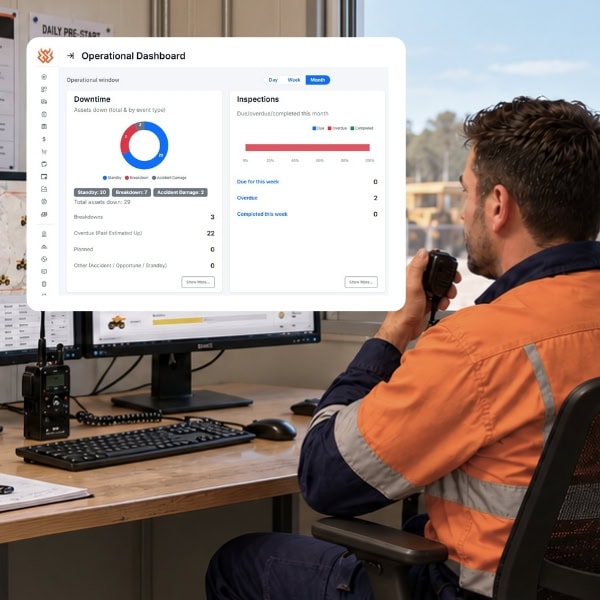
Keep an eye on downtime
Track when machines experience downtime and record repair activity to identify recurring issues.
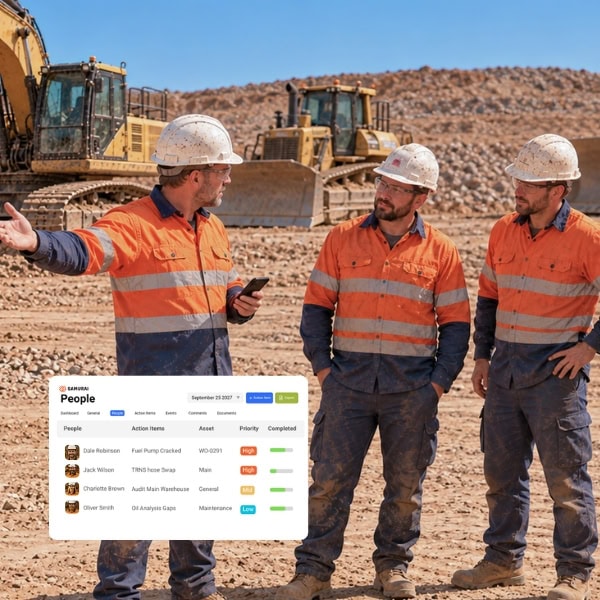
Bring contractors into the process
Contractors can receive and complete jobs through a secure SMS or email link, without needing a software licence. Rather than relying on separate records and follow-up calls, your team has one clear view of maintenance activity, keeping each piece of equipment's history in one place.
Discover our shift log management, contractor management software, and work order and asset tracking tools.
Works Alongside Your Accounting and ERP Systems
You don’t need to replace your existing business systems to manage maintenance with Samurai. The software works alongside platforms like MYOB, Xero, QuickBooks and SAP, keeping maintenance planning and work orders in one place while your accounting system handles the financial side of things.
With existing Xero, MYOB and Vista Viewpoint integrations, telematics connections such as Cat VisionLink and Komatsu KOMTRAX, and open RESTful APIs, Samurai helps reduce double handling and keeps important asset and cost information connected. Telematics integrations are included in the Business plan, and API access comes with Enterprise.
Find out more about Samurai’s integrations.
Asset Management that actually Drives Decisions
Most systems treat asset management as a register and maintenance as a separate process. You end up tracking assets in one place, work in another, and costs somewhere else again.
Maintenance might get done, but you still don’t have a clear picture of what each asset actually costs, how it performs, or when it should be replaced. Decisions are made on partial information, and risk builds as the fleet grows.
Samurai takes a different approach. Samurai is built around the full lifecycle of each asset. Samurai is built around the full lifecycle of each asset, not just the maintenance activity. Every job, cost, and component feeds back into the asset, so you can see performance, cost, and risk in one place and make decisions that align with the business.
Understand true asset cost
Asset management is about more than maintenance costs. Track purchase price, maintenance spend, and disposal value in one place, so you understand the true cost of each asset over its full life.
Link maintenance to output
Maintenance isn’t the goal, uptime is. Connect asset performance, availability, and cost to the work your fleet delivers, so decisions are based on their impact on revenue and utilisation.
Track The Asset Life-Cycle
From acquisition through to disposal, every stage of the asset lifecycle is captured. Know where each machine sits, what it has cost, and what it’s likely to cost next.
Manage components and rotables
Major components don’t belong to one machine. Track engines, transmissions, and other rotables across their full life, including changeouts, usage, and remaining value.
Make better capital decisions
When you can see total cost, performance, and history in one place, asset decisions become clearer. Replace at the right time, price work correctly, and protect margin across the fleet.
Plan with real data
Use real maintenance history and component performance to forecast future spend and risk. Make repair vs replace decisions with confidence, not guesswork.
<div style="display: flex; gap: 15px; align-items: center; justify-content: space-between; flex-wrap: wrap;">
<div style="flex: 1; min-width: 250px;">
</div>
<div>
<a href="tel:+61739150894" style="background-color: #f26522; color: #ffffff; padding: 12px 20px; text-decoration: none; border-radius: 4px; font-weight: 600; display: inline-block; white-space: nowrap;">Contact Us</a>
</div>
</div>
An Asset Management System that Drives Improvement
Assets and tasks work together to define how maintenance actually runs. Assets give you structure. Tasks define how maintenance is planned, executed, and costed.
Every inspection, service, and repair comes from a task linked to an asset. That task defines what needs to be done, how often, and what it takes. When work is completed, it builds a clean, reliable history against the asset automatically.

Work is Standardised across the fleet
An asset management system with a task-based approach standardises maintenance across every asset, site, and crew. Each task defines the required steps, checks, parts, labour, and close-out information, so services, inspections, and repairs follow the same process every time. That means less variation, fewer missed steps, and maintenance standards that hold up as the fleet grows.
Keeps your fleet Compliant
As the fleet grows, compliance becomes harder to control. Inspections, services, and mandatory checks can’t rely on memory or spreadsheets without risk. Tasks are scheduled and tracked automatically, so required work is completed on time and recorded properly. You stay audit-ready, avoid gaps in records, and reduce the risk of issues that can stop a site.

See the full feature for every asset
Every job, cost, and component feeds back into the asset from the work order. You’re not looking at disconnected maintenance records, you see how each machine performs over time. Maintenance history, component changeouts, and cost all sit in one place, so you can understand what the asset has delivered, what it has cost, and what’s coming next. This means you’re tracking maintenance activity as well as managing asset performance, risk, and total cost with a clear, current view you can rely on when making decisions.
WHAT CHANGES WHEN YOU HAVE CONTROL OF YOUR ASSETS
When asset data, maintenance, and cost come together, decisions become clearer and the business runs with less guesswork.
You understand true cost per asset
Maintenance supports uptime and revenue
Asset performance becomes clear
Future cost and risk are visible
See how Samurai manages assets in the real world
<div style="display: flex; gap: 15px; align-items: center; justify-content: space-between; flex-wrap: wrap;">
<div style="flex: 1; min-width: 250px;">
</div>
<div>
<a href="tel:+61739150894" style="background-color: #f26522; color: #ffffff; padding: 12px 20px; text-decoration: none; border-radius: 4px; font-weight: 600; display: inline-block; white-space: nowrap;">Contact Us</a>
</div>
</div>
Plans and pricing
Straightforward pricing. Serious fleet control.
Starter
Best for small teams with fewer than 20 assets
$49per user/month
Book a demoBusiness
Best for medium to large operations
$125per user/month
Book a demoEnterprise
Best for large, multi-site operations
Custompricing
Let's talk14-day trial. No credit card required. Billed monthly. Compare all features
Frequently Asked Questions
What is an asset management system?
An asset management system tracks equipment, maintenance, and performance in one place. Samurai goes further by linking assets directly to maintenance tasks, so work is scheduled, executed, and recorded automatically.
How is this different from a basic asset register?
A basic register lists assets. Samurai connects assets to tasks, work orders, and history, turning it into a working system that drives maintenance.
Can I manage components and major rebuilds?
Yes. Components like engines and transmissions can be tracked separately, including usage, cost, and lifecycle across multiple assets.
Does it work with existing systems?
Yes. Samurai can sit alongside your accounting, ERP, or dispatch systems like MYOB, Quickbook, Xero and even SAP and act as the maintenance control layer.
How does it help maintenance planners?
Planners get a clear view of what’s due, late, and at risk based on real data, not manual updates or spreadsheets.
What is equipment management software?
Equipment management software brings together your assets, maintenance and costs. It helps you plan work, schedule maintenance tasks, and track jobs as and when they happen. This helps you see how your equipment is performing, what it costs to run, and most importantly, what needs attention next. Samurai CMMS covers the full asset lifecycle, from equipment acquisition through to disposal. Every job, cost, and component change contributes to the asset’s history. This gives you a clearer picture of the equipment’s performance and costs over time.
How is equipment management software different from a standalone asset tracking app?
A standalone asset tracking app helps you keep track of your equipment, but equipment management software goes a step further. It connects your assets to maintenance schedules, work orders, costs, and component history. This helps you manage equipment rather than simply record what you have.
With Samurai CMMS, every inspection, service, and repair builds your asset’s maintenance history, making it easier to understand ongoing costs, track equipment uptime, plan future spending, and decide whether to repair or replace an asset.
What audit controls and permissions does equipment management software include?
This varies by software, but equipment management systems can help you track inspections and servicing to keep maintenance records organised and prepared for audits.
With Samurai CMMS, you’re able to define the required steps, checks, parts, and labour for each task, creating a clear and detailed record of completed work. Access is role-aware, so a fitter sees fitter tasks and a supervisor sees supervisor tasks, and Enterprise plans add hierarchical approvals and single sign-on.