
CMMS For Earthmoving Fleets
Plant Hire Management
A practical Asset Operating System that helps plant hire businesses understand the condition, cost, risk and future value of every machine in the fleet.
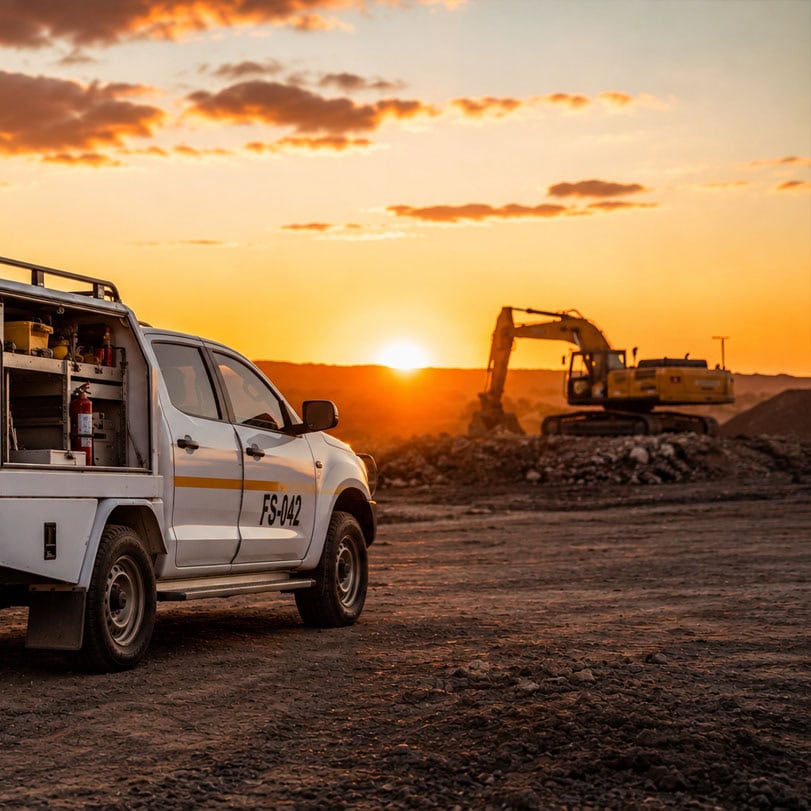
Why Plant Hire Companies Need More Than a CMMS
A traditional CMMS is designed to manage maintenance activity. Plant hire businesses, however, face a much broader challenge. They need to understand the condition, utilisation, cost, risk and future value of every machine they own, because the asset itself is the product, the income source and the capital exposure.
Every excavator, loader, grader, roller and truck must earn its place in the fleet. The machine is the product, the income source and the capital exposure.
A machine can be fully maintained and still be a poor commercial performer if it:
- Sits idle
- Returns damaged
- Burns through components
- Costs too much to operate
- Reaches the wrong age profile for the market
Plant hire businesses need more than maintenance records. They need visibility across the entire asset lifecycle.
The Plant Hire Visibility Gap
Most plant hire businesses already have access to plenty of information through maintenance systems, hire software, telematics and finance platforms. The challenge is bringing that information together in a way that helps managers understand the true condition, cost, utilisation, risk and future value of each asset.
The problem is that the information is often disconnected.
When asset information is fragmented, businesses struggle to answer important questions:
- Which assets are creating value?
- Which assets are becoming a risk?
- Which machines should be rebuilt, sold or replaced?
- Which customers are causing the most wear and damage?
Asset value doesn't stop at maintenance
Most plant hire businesses can tell you when a machine was serviced. Far fewer can confidently explain how asset condition, utilisation, customer behaviour and lifecycle costs are affecting its long-term value.
An Asset Operating System brings these factors together into a single asset record, helping managers make decisions based on the full history of the machine rather than isolated maintenance events.
That becomes increasingly important as fleets grow, machines move between sites and capital replacement decisions become more difficult.
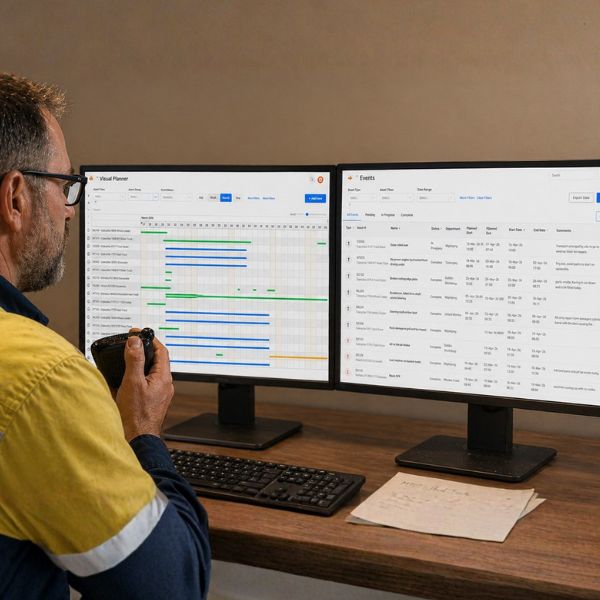
The visibility gap costs more than you think
The biggest challenge for many plant hire businesses is not a lack of information. It is that information is spread across hire systems, maintenance records, inspections, telematics, emails and spreadsheets.
When asset information becomes fragmented, it becomes harder to identify risk, defend damage claims, forecast rebuilds and understand true lifecycle costs.
Samurai helps create a complete operating record for every machine, giving managers a clearer picture of what is happening across the fleet.
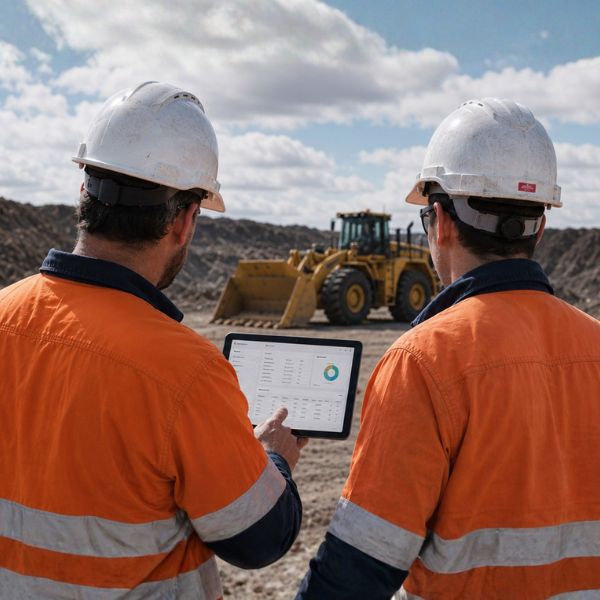
Aset decisions need more than service history
Maintenance history is important, but it is only one input into a much larger decision.
Plant hire businesses regularly need to decide whether a machine should be retained, rebuilt, redeployed, replaced or sold. Those decisions depend on utilisation, condition, component life, lifecycle costs and residual value, not simply whether servicing has been completed.
By connecting these factors to the asset record, Samurai helps turn operational information into practical fleet decisions.
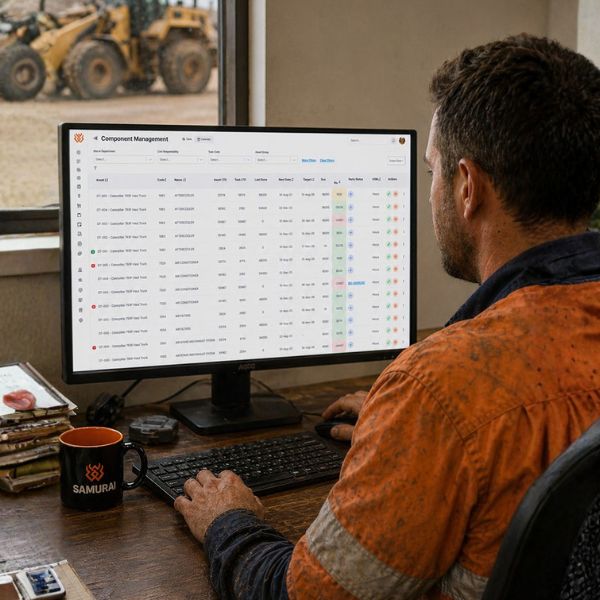
Protect residual value with better evidence
For many hire businesses, a significant portion of an asset’s economic return comes from its residual value at disposal.
Condition reports, inspection records, photos, damage evidence and maintenance history all contribute to protecting that value.
When evidence is disconnected, important details can be lost. When evidence is connected to the asset throughout its life, businesses have a stronger foundation for customer accountability, insurance claims, asset valuations and disposal decisions.
See how Samurai works for Plant Hire companies
Samurai: An Asset Operating System for Plant Hire Fleets
Samurai is designed for earthmoving and plant hire businesses that need more than a maintenance system.
It brings together:
Asset Management
Maintenance History
Forms and Inspections
Component Tracking
Plant Hire Rate Development
Mobile Field Data Capture
Contractor Management
Asset Decision Support
ASSET OPERATING SYSTEM VS TRADITIONAL CMMS
When evaluating systems for a plant hire business, the question is not which platform has the longest feature list. The more important question is whether the system helps you manage maintenance activity or manage the asset itself. An Asset Operating System connects condition, utilisation, inspections, lifecycle costs and asset value into a single operating record that supports better commercial decisions.
| Capability | Traditional CMMS | Asset Operating System |
|---|---|---|
| Primary focus | Managing maintenance activity | Managing the complete asset lifecycle |
| Primary question | What maintenance work has been completed? | What is this asset worth, costing and likely to need next? |
| Asset history | Service and repair records | Complete asset history from acquisition through to disposal |
| Asset condition | Maintenance-driven visibility | Condition, utilisation, damage and risk visibility |
| Lifecycle cost visibility | Historical maintenance costs and reporting | Forward lifecycle cost and rebuild forecasting |
| Residual value management | Generally outside the scope of the system | Supports residual value protection and disposal decisions |
| Utilisation visibility | Often disconnected from maintenance records | Utilisation viewed alongside condition, cost and risk |
| Components and rebuilds | Maintenance-focused component tracking | Components, rebuilds and lifecycle management connected to the asset |
| Customer-facing inspections and forms | Often managed through separate forms, paperwork or systems | Pre-hire, off-hire, damage and condition forms linked directly to the asset record |
| Customer accountability | Limited linkage between customers, sites and asset condition | Customer, site and damage history connected to every asset |
| Replacement planning | Often supported by spreadsheets and manual analysis | Supports retain, rebuild, replace and disposal decisions |
| Decision value | Shows what maintenance activity occurred | Helps determine what should happen next |
| Business outcome | Better maintenance control | Better asset value, utilisation and capital decisions |
BUILT FOR THE FULL ASSET LIFECYCLE
Most maintenance systems are designed to record what happened.
Plant hire businesses also need to understand what happens next.
Should a machine be rebuilt or replaced? Is utilisation supporting ownership costs? Is residual value being protected? Which assets are creating value, and which are becoming a risk?
These are asset management decisions, not maintenance decisions.
Samurai brings together maintenance records, inspections, condition assessments, customer history, lifecycle costs and utilisation into a single asset record. By connecting information that is often scattered across multiple systems, managers gain a clearer view of the assets that drive the business.
Because when the asset is the product, understanding its future is just as important as recording its past.
I prefer the second version. It feels more strategic, reinforces the Asset Operating System concept, and speaks directly to owners and GMs rather than maintenance planners.
Frequently asked questions
What is an Asset Operating System?
An Asset Operating System is a system that helps plant hire businesses manage the complete asset lifecycle. Unlike a traditional CMMS, which focuses primarily on maintenance activities, an Asset Operating System brings together maintenance history, inspections, utilisation, lifecycle costs, customer history and asset condition to support better commercial decisions.
How is an Asset Operating System different from a CMMS?
A CMMS is designed to manage maintenance work such as work orders, servicing and repairs. An Asset Operating System goes further by helping businesses understand asset value, utilisation, lifecycle costs, rebuild planning, replacement timing and residual value. It provides the information needed to make decisions about what should happen next, not just what has already happened.
Why do plant hire companies need more than maintenance software?
Plant hire businesses own assets that generate revenue and represent a significant capital investment. Understanding maintenance history is important, but it is only one part of managing asset performance. Businesses also need visibility into utilisation, condition, customer damage, component life, replacement timing and future costs to protect asset value and maximise return on investment.
Can Samurai be used by plant hire and dry hire businesses?
Yes. Samurai is designed for earthmoving, construction and plant hire fleets. It supports asset management, maintenance planning, inspections, forms, component tracking, lifecycle costing and asset performance management across the entire fleet.
Does Samurai support pre-hire and off-hire inspections?
Yes. Samurai includes a flexible forms platform that can be used for pre-hire inspections, off-hire inspections, damage reports, condition assessments, compliance checks and other operational workflows. Inspection records, photos and evidence are linked directly to the asset record.
Can Samurai track asset lifecycle costs?
Yes. Samurai includes lifecycle cost modelling and forecasting tools that help businesses understand whole-of-life ownership costs. This includes maintenance costs, component rebuilds, replacement expenditure and future cost projections based on asset usage and operating history.
How does Samurai help protect residual value?
Residual value is influenced by asset condition, maintenance history, component life and evidence of how equipment has been used and maintained. Samurai keeps this information connected to the asset record, helping businesses make more informed rebuild, replacement and disposal decisions.