
CMMS For Earthmoving Fleets

Asset Management for Equipment fleets
Samurai is an asset management system that connects your assets, maintenance, and costs in one place. Work is defined properly, scheduled consistently, and tracked as it happens, so you always know what each asset is doing, what it costs, and what’s coming next.
ASSET MANAGEMENT THAT ACTUALLY DRIVES DECISIONS
Most systems treat asset management as a register and maintenance as a separate process. You end up tracking assets in one place, work in another, and costs somewhere else again.
Maintenance might get done, but you still don’t have a clear picture of what each asset actually costs, how it performs, or when it should be replaced. Decisions are made on partial information, and risk builds as the fleet grows.
Samurai takes a different approach. Samurai is built around the full lifecycle of each asset. Samurai is built around the full lifecycle of each asset, not just the maintenance activity. Every job, cost, and component feeds back into the asset, so you can see performance, cost, and risk in one place and make decisions that align with the business.
UNDERSTAND TRUE ASSET COST
Asset management is about more than maintenance costs. Track purchase price, maintenance spend, and disposal value in one place, so you understand the true cost of each asset over its full life.
LINK MAINTENANCE TO OUTPUT
Maintenance isn’t the goal, uptime is. Connect asset performance, availability, and cost to the work your fleet delivers, so decisions are based on their impact on revenue and utilisation.
TRACK The ASSET LIFE-CYCLE
From acquisition through to disposal, every stage of the asset lifecycle is captured. Know where each machine sits, what it has cost, and what it’s likely to cost next.
MANAGE COMPONENTS AND ROTABLES
Major components don’t belong to one machine. Track engines, transmissions, and other rotables across their full life, including changeouts, usage, and remaining value.
MAKE BETTER CAPITAL DECISIONS
When you can see total cost, performance, and history in one place, asset decisions become clearer. Replace at the right time, price work correctly, and protect margin across the fleet.
PLAN WITH REAL DATA
Use real maintenance history and component performance to forecast future spend and risk. Make repair vs replace decisions with confidence, not guesswork.
An Asset Management System that drives Improvement
Assets and tasks work together to define how maintenance actually runs. Assets give you structure. Tasks define how maintenance is planned, executed, and costed.
Every inspection, service, and repair comes from a task linked to an asset. That task defines what needs to be done, how often, and what it takes. When work is completed, it builds a clean, reliable history against the asset automatically.
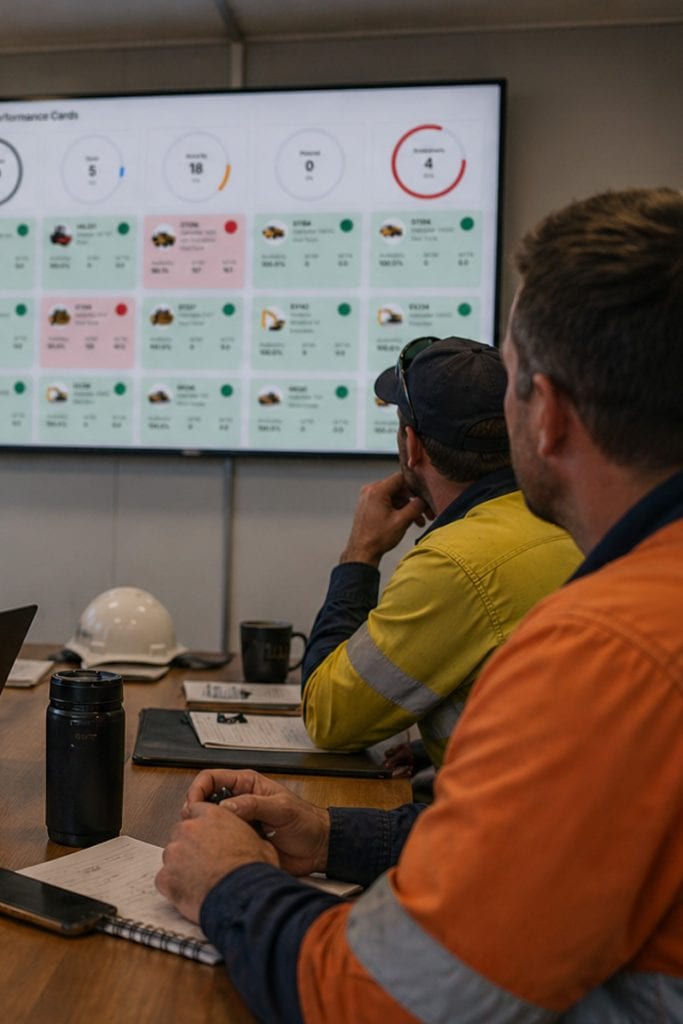
Work is Standardised across the fleet
An asset management system with a task-based approach standardises maintenance across every asset, site, and crew. Each task defines the required steps, checks, parts, labour, and close-out information, so services, inspections, and repairs follow the same process every time.
That means less variation, fewer missed steps, and maintenance standards that hold up as the fleet grows.
Keeps your fleet Compliant
As the fleet grows, compliance becomes harder to control. Inspections, services, and mandatory checks can’t rely on memory or spreadsheets without risk.
Tasks are scheduled and tracked automatically, so required work is completed on time and recorded properly. You stay audit-ready, avoid gaps in records, and reduce the risk of issues that can stop a site.
SEE THE FULL PICTURE FOR EVERY ASSET
Every job, cost, and component feeds back into the asset from the work order. You’re not looking at disconnected maintenance records, you see how each machine performs over time.
Maintenance history, component changeouts, and cost all sit in one place, so you can understand what the asset has delivered, what it has cost, and what’s coming next.
This means you’re tracking maintenance activity as well as managing asset performance, risk, and total cost with a clear, current view you can rely on when making decisions.
WHAT CHANGES WHEN YOU HAVE CONTROL OF YOUR ASSETS
When asset data, maintenance, and cost come together, decisions become clearer and the business runs with less guesswork.
You understand true cost per asset
Maintenance supports uptime and revenue
Asset performance becomes clear
Future cost and risk are visible
Frequently asked questions
What is an asset management system?
An asset management system tracks equipment, maintenance, and performance in one place. Samurai goes further by linking assets directly to maintenance tasks, so work is scheduled, executed, and recorded automatically.
How is this different from a basic asset register?
A basic register lists assets. Samurai connects assets to tasks, work orders, and history, turning it into a working system that drives maintenance.
Can I manage components and major rebuilds?
Yes. Components like engines and transmissions can be tracked separately, including usage, cost, and lifecycle across multiple assets.
Does it work with existing systems?
Yes. Samurai can sit alongside your accounting, ERP, or dispatch systems like MYOB, Quickbook, Xero and even SAP and act as the maintenance control layer.
How does it help maintenance planners?
Planners get a clear view of what’s due, late, and at risk based on real data, not manual updates or spreadsheets.