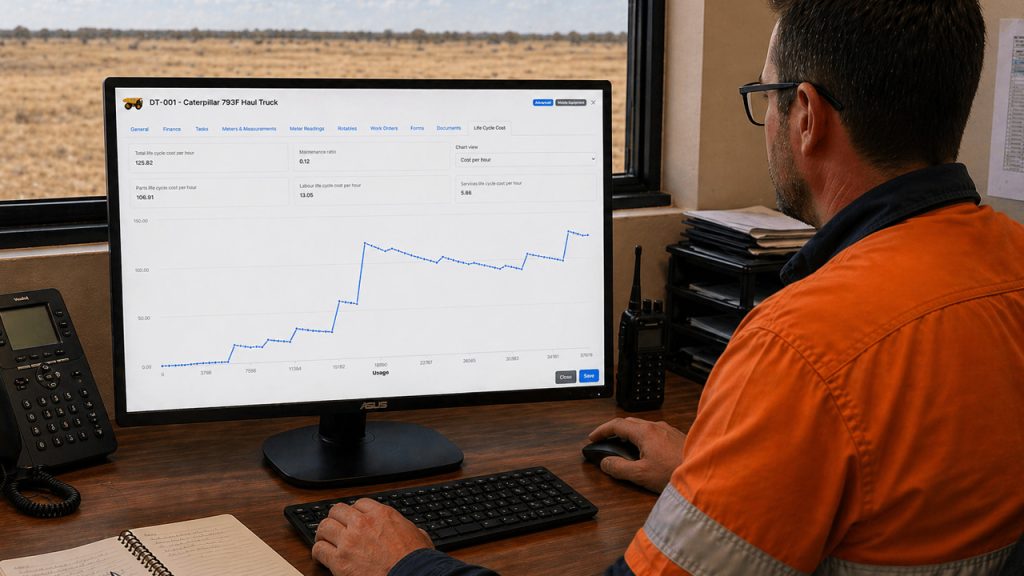
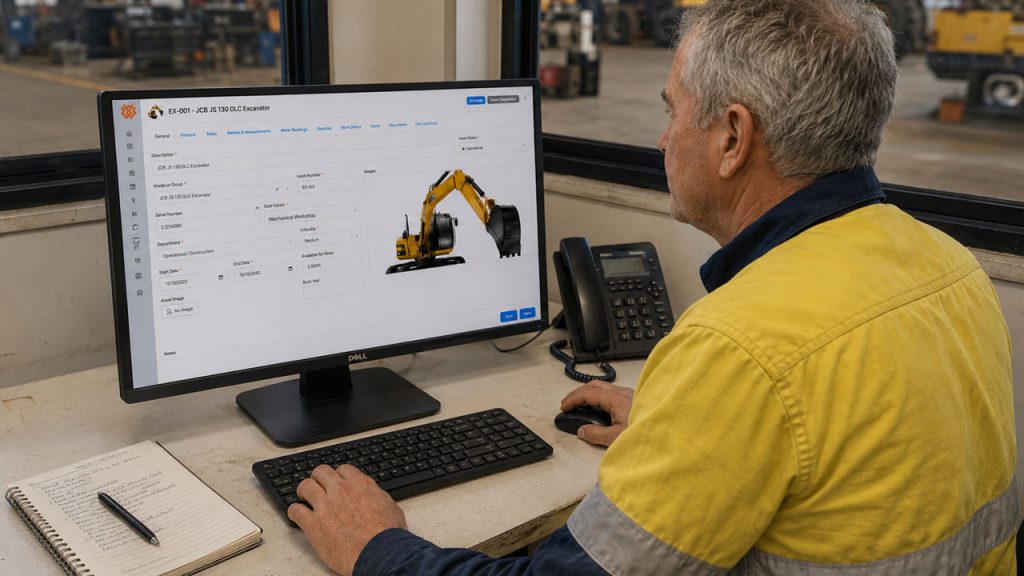
In heavy equipment maintenance, a CMMS implementation often starts with good intentions. Better planning. Better visibility. Better control of costs and downtime. But many projects fail to deliver the expected value for one simple reason: the master data underneath the system was never accurate enough to support reliable decisions.
For maintenance managers and reliability engineers in mining, civil construction, and earthmoving, this becomes a familiar frustration. The software is live. Work orders are flowing. Dashboards look impressive. But the business still cannot confidently answer critical operational questions.
- Which machines are driving maintenance cost?
- What components are failing early?
- What is our real maintenance cost per operating hour?
- Where are we losing availability?
Without good master data, the answers are unreliable.
In heavy equipment operations, master data is not an IT exercise. It is operational infrastructure.
Asset hierarchies, component structures, service intervals, parts catalogues, meter readings, failure codes, and rebuild histories all directly affect maintenance performance. If a haul truck exists three different ways in the system, or if planners and technicians use inconsistent naming conventions, the data quickly becomes impossible to trust.
Once trust disappears, people stop relying on the CMMS. Spreadsheets return. Manual workarounds appear. Decision-making becomes reactive again.
The reality is that most CMMS projects underestimate the effort required to structure maintenance data properly from the start.
And the cost of getting it wrong is significant.
Research referenced in master data business case studies shows poor data quality can consume up to 30% of employee productivity through rework, searching, duplication, and correction activities. In maintenance environments, that lost productivity often shows up as planners searching for parts, technicians chasing service history, or supervisors manually validating reports before meetings.
Even small inefficiencies scale quickly in heavy equipment fleets.
Take a maintenance team of 20 tradespeople. If each person loses just 15 minutes per shift dealing with poor information quality, duplicated asset records, or missing maintenance history, that represents more than 1,200 lost labour hours per year. At fully burdened labour rates common in mining and civil operations, that can easily exceed $150,000 annually in wasted labour alone.
And labour inefficiency is only the start.
A single hour of unplanned downtime on production-critical mining or earthmoving equipment can cost thousands in lost production, idle crews, and schedule disruption. When component histories and failure data are inaccurate, repeat failures become harder to identify and prevent. Reliability engineering becomes reactive instead of predictive.
Inventory is another major opportunity.
Many operations unknowingly carry duplicate stock because parts are named inconsistently across systems and sites. Different descriptions for the same hose, filter, or bearing create duplicate purchasing and excess inventory holdings. Rationalising parts master data often produces immediate reductions in inventory value while improving parts availability.
This is where the business case for master data becomes practical, not theoretical.
To justify investment during a CMMS implementation, maintenance leaders should focus on measurable operational impacts:
- Reduction in technician and planner time wasted searching for information
- Reduction in duplicate inventory and unnecessary purchasing
- Reduction in unplanned downtime hours
- Improvement in PM compliance and scheduling efficiency
- Increased wrench time and labour utilisation
- More accurate lifecycle cost tracking and replacement forecasting
The strongest CMMS implementations are not the ones with the most features. They are the ones where the business committed early to building clean, structured, standardised maintenance data.
That requires investment. Time from experienced maintenance personnel. Asset hierarchy development. Component standards. Parts cleansing. Governance processes. Ongoing ownership.
But the return compounds for years.
Good master data allows organisations to make confident maintenance decisions, improve reliability forecasting, compare fleet performance accurately, and finally trust the information coming out of the system.
At Samurai, we see this firsthand across mining, civil construction, and earthmoving operations. The businesses that achieve the best results from a CMMS are not necessarily the largest. They are the ones that understand a simple reality:
Better maintenance decisions start with better data.
Frequently Asked Questions
Master data in a Heavy Equipment CMMS is the structured operational information that supports maintenance planning, reporting, reliability analysis, and lifecycle management for heavy machinery.
This includes:
- Asset registers
- Equipment hierarchies
- Component structures
- Spare parts catalogues
- Service intervals
- Meter readings
- Failure codes
- Maintenance history
In mining, civil construction, and earthmoving operations, accurate master data allows maintenance teams to track equipment performance, manage downtime, and make better lifecycle cost decisions.
A Heavy Equipment CMMS is only as reliable as the data behind it.
Poor master data creates operational problems such as:
- Duplicate equipment records
- Incorrect PM schedules
- Inaccurate maintenance reporting
- Duplicate spare parts inventory
- Poor failure tracking
- Reduced planner efficiency
- Higher equipment downtime
Good master data improves maintenance visibility, reliability engineering, inventory management, and equipment lifecycle analysis across heavy equipment fleets.
The most common Heavy Equipment CMMS master data issues include:
- Duplicate asset records
- Inconsistent component naming conventions
- Missing serial numbers
- Poorly structured equipment hierarchies
- Duplicate inventory items
- Incorrect maintenance intervals
- Incomplete failure coding
- Inaccurate meter readings
These issues reduce trust in the CMMS and make maintenance decision-making more reactive.
Poor CMMS master data increases maintenance costs and reduces operational efficiency.
In heavy equipment maintenance environments, poor data often results in:
- Technicians wasting time searching for information
- Planners manually correcting maintenance records
- Repeat equipment failures
- Excess spare parts inventory
- Reduced PM compliance
- Inaccurate maintenance cost reporting
- Lower equipment availability
Even small inefficiencies can create significant operational costs across mining and earthmoving fleets.
Before implementing a Heavy Equipment CMMS, organisations should prepare:
- Asset registers
- Equipment hierarchies
- Component structures
- Spare parts master data
- Preventive maintenance schedules
- Meter configurations
- Failure codes
- Cost centres and locations
• Standard job templates
• Supplier and vendor records
Preparing this information early improves implementation quality and reduces future cleanup work.
Ready to take control of your maintenance?
Samurai helps earthmoving and mining fleets capture maintenance properly at the source, reduce downtime, and stay in control of cost and performance across every site.