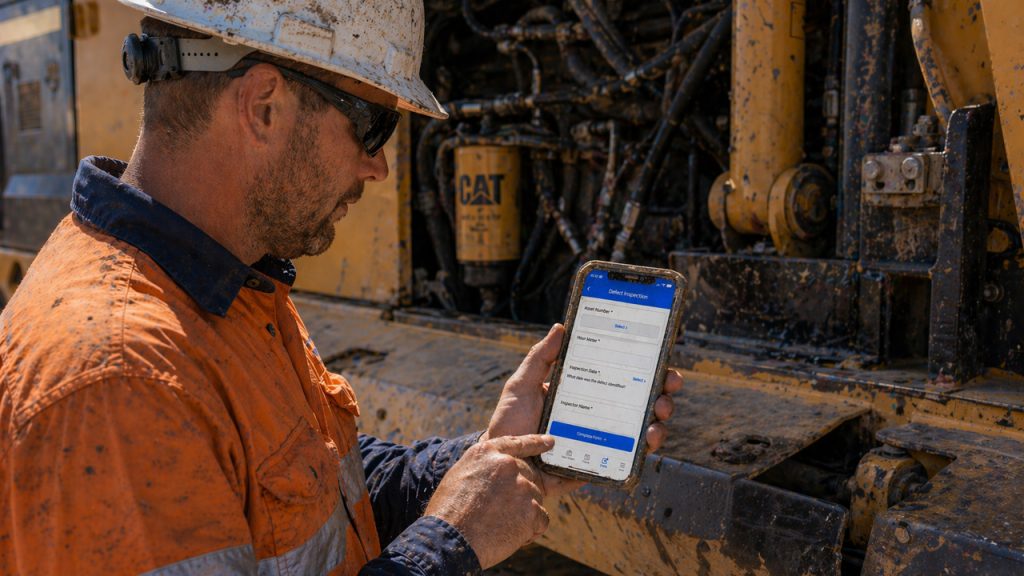

For years, maintenance software for construction equipment has largely followed the same formula. Complex enterprise systems, heavy administration overhead, difficult user interfaces, and processes that often feel disconnected from the realities of field operations.
But expectations are changing rapidly.
Across the maintenance and asset management industry, there is a growing shift toward platforms that prioritise usability, mobility, automation, and operational intelligence rather than simply acting as a digital filing cabinet for maintenance records.
The next generation of construction equipment CMMS platforms is no longer being judged solely on feature lists. Organisations are increasingly asking a different set of questions:
- Will technicians actually use it?
- Does it reduce operational friction?
- Can supervisors get actionable information quickly?
- Does it support mobile-first workflows?
- Can AI and automation genuinely improve efficiency?
- Will it scale without creating additional administration burden?
These conversations are becoming increasingly common across civil construction, fleet management, mining services, and field operations businesses.
User Experience Is No Longer Optional
One of the biggest industry changes is the growing focus on user experience.
Historically, many maintenance systems were designed primarily around process control and compliance. While those areas remain important, the practical reality is that maintenance software only creates value when people consistently use it correctly.
Technicians, supervisors, planners, and operators now expect software to feel intuitive, responsive, and accessible from anywhere. Poor usability creates resistance, inconsistent data quality, delayed work order completion, and reduced visibility across the business.
In many organisations, operational teams have become accustomed to working around their maintenance systems rather than working with them.
Modern CMMS platforms need to reverse that trend by focusing on:
- mobile-first workflows
- simplified work execution
- reduced data entry friction
- faster navigation
- cleaner interfaces
- operational visibility in real time
The businesses seeing the greatest improvements are often the ones that focus not just on functionality, but on adoption.
The Industry Is Moving Beyond Legacy Systems
Another major shift is the growing recognition that many traditional maintenance platforms were built for a very different technology era.
Legacy systems often rely on:
- heavy desktop-based workflows
- large administration teams
- complex configuration layers
- fragmented integrations
- slow implementation cycles
While many of these platforms remain powerful, organisations are increasingly questioning whether the operational overhead required to maintain them still makes sense.
Cloud-native platforms are changing expectations.
Businesses now expect:
- rapid deployment
- easier integrations
- scalable cloud infrastructure
- real-time mobile access
- flexible workflows
- faster development cycles
For many operational teams, the goal is no longer simply to digitise maintenance processes. The goal is to create systems that actively improve operational performance while remaining simple enough for field teams to adopt naturally.
AI Needs To Be Practical, Not Just Marketing
Artificial intelligence has quickly become one of the most discussed topics in enterprise software, but many organisations remain sceptical about where it genuinely adds value.
In maintenance environments, AI only becomes useful when it solves real operational problems.
The most effective use cases are not flashy demonstrations. They are practical workflow improvements that reduce friction for technicians, planners, and supervisors.
Examples include:
- voice-to-work-order creation
- intelligent daily summaries
- automated maintenance recommendations
- natural language search
- contextual reporting
- workflow automation
- operational prioritisation
The rapid improvement in large language models is creating opportunities that were not realistically achievable even 18 months ago.
Natural language interaction is becoming increasingly viable in operational environments. Technicians can now describe issues in plain language, while systems automatically structure, categorise, and route maintenance information appropriately.
For supervisors and managers, AI-driven summaries and operational insights can dramatically reduce the time spent manually reviewing maintenance activity.
Importantly, the industry is beginning to move beyond “AI for the sake of AI” and toward practical automation that supports day-to-day operational execution.
Reporting Still Matters
While innovation and usability are becoming major differentiators, reporting and operational visibility remain critical requirements for most organisations.
IT teams, executives, and operational managers still require:
- structured reporting
- compliance visibility
- export capability
- KPI tracking
- governance oversight
- operational analytics
The challenge for modern CMMS platforms is balancing advanced reporting capability with simplicity and usability.
Historically, many systems became difficult to use because they prioritised administration and reporting complexity over operational workflow design.
The future likely belongs to platforms that can deliver both:
- operational simplicity for field users
- powerful visibility for management and leadership
The Future Of Maintenance Platforms
The maintenance software market is entering a significant transition period.
Organisations are increasingly looking for platforms that:
- support modern mobile operations
- reduce administration overhead
- improve adoption across field teams
- integrate easily with other business systems
- provide practical AI-driven assistance
- evolve rapidly alongside changing operational needs
The shift away from legacy-first thinking is accelerating.
Businesses no longer want systems that simply store maintenance data. They want platforms that actively help operations run better.
The next generation of CMMS software will likely be defined less by the size of feature lists and more by how effectively those systems improve real-world execution, visibility, and operational decision-making.
That is where the industry is heading, and the organisations that embrace these changes early are likely to gain a significant operational advantage over the coming years.
Ready to take control of your maintenance?
Samurai helps earthmoving and mining fleets capture maintenance properly at the source, reduce downtime, and stay in control of cost and performance across every site.